
Interchange-Plus vs Flat-Rate Pricing: How to Cut Credit Card Processing Fees (2026)
Understand the differences between flat-rate processing (Stripe, Square) and Interchange-Plus pricing. Volume break-even models, hidden processor markups, debit card spreads, and surcharging rules.

Every time a customer swipes, taps, or enters credit card details on your checkout page, an intricate web of financial institutions claims a percentage of that transaction. For growing e-commerce brands, digital merchants, and SaaS founders, credit card processing fees represent one of the fastest-growing operating expenses.
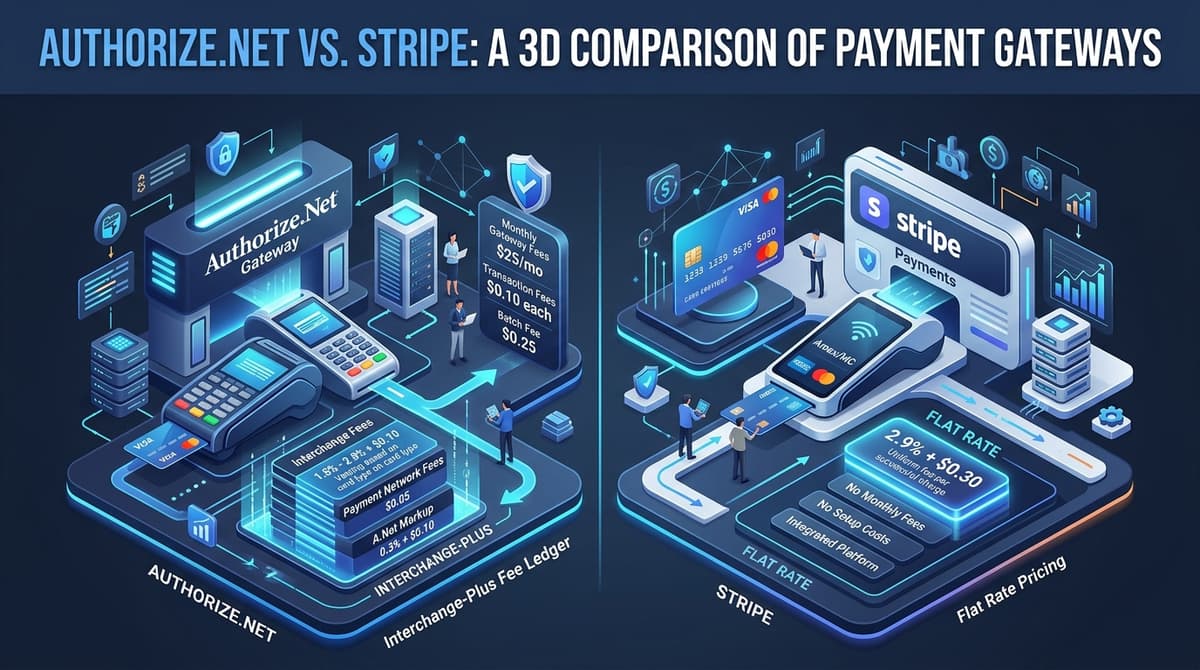
Most new businesses launch with flat-rate aggregators like Stripe (2.9% + $0.30) or Square (2.6% + $0.10). While convenient, as your sales volume climbs into tens of thousands of dollars per month, flat-rate pricing silently drains thousands of dollars in profit margin.

In this guide audited by the FeeKit Financial Engineering Desk for fiscal year 2026, we unpack the three-tier anatomy of credit card fees, compare wholesale Interchange-Plus pricing against flat-rate models, identify the exact volume break-even point to switch, and analyze legal rules around card surcharging.
1. The Anatomy of a Credit Card Fee: Where Does the Money Go?#
When a customer makes a $100.00 purchase with a credit card, the processing fee is split among three separate parties:
[Total Processing Fee] = [Interchange Fee] + [Assessment / Card Brand Fee] + [Processor Markup]
- The Interchange Fee (70% – 85% of total cost):
- Who gets it: The customer’s issuing bank (e.g., Chase, Bank of America, Capital One).
- Why it exists: Covers the bank’s fraud liability, credit risk, grace periods, and cardholder reward points (cashback, airline miles).
- How it varies: Interchange is non-negotiable. Hundreds of distinct tiers exist based on card type (debit vs basic credit vs premium business reward card) and entry method (in-person chip vs keyed-in online).
- The Assessment / Brand Fee (10% – 15% of total cost):
- Who gets it: The card payment networks (Visa, Mastercard, Discover, American Express).
- Why it exists: Network maintenance, security clearinghouses, and global transaction routing.
- Typical rate: Approximately 0.13% to 0.15% of the transaction volume.
- The Payment Processor Markup (The Only Negotiable Component):
- Who gets it: Your gateway or merchant service provider (e.g., Stripe, Square, Adyen, Helcim, Chase Merchant Services).
- Why it exists: Gateway software, merchant dashboard, dispute management, and customer support.
2. Flat-Rate Pricing vs. Interchange-Plus: Side-by-Side#
Understanding the structural difference between these two pricing models reveals why high-volume sellers switch:
| Dimension | Flat-Rate Pricing (Stripe, Square, PayPal) | Interchange-Plus (IC+) Pricing (Dedicated Merchant Accounts) |
|---|---|---|
| Pricing Model | Single bundled rate (e.g., 2.9% + $0.30) for every card. | Wholesale Interchange + Card Assessment + Fixed Processor Margin (e.g., Cost + 0.20% + $0.10). |
| Transparency | Low. Wholesale costs are hidden behind a flat percentage. | Complete. Every statement itemizes exact interchange tiers. |
| Debit Card Advantage | None. Processor pockets the huge spread on low-cost regulated debit cards. | Full Benefit. Merchants capture the massive savings of debit interchange (0.05% + $0.21). |
| Monthly Gateway Fees | $0/month. Pay only per transaction. | $0 to $25/month depending on provider. |
| Best Suited For | Startups, businesses processing < $15k/mo, micro-merchants. | Established stores processing > $20k/mo, high average order values. |
3. The Debit Card Trap: How Aggregators Maximize Their Profit#
Under the US federal Durbin Amendment, interchange on debit cards issued by large national banks is legally capped at 0.05% + $0.21.
Wholesale Network Cost: ($100.00 × 0.0005) + $0.21 + Assessment ($0.14) = $0.40
Stripe / Flat-Rate Charge: ($100.00 × 0.029) + $0.30 = $3.20
Processor Margin: $3.20 - $0.40 = $2.80 pure profit per transaction
Under an Interchange-Plus plan with a markup of IC + 0.20% + $0.10:
- Wholesale cost: $0.40
- Processor markup: ($100.00 × 0.002) + $0.10 = $0.30
- Total fee paid by you: $0.70 (Saving you $2.50 on a single $100 purchase!).
If debit cards make up 40% of your retail transactions, flat-rate pricing costs your company thousands of dollars every year in unnecessary markup. Test your exact processing numbers with our Stripe Fee Calculator.
4. The Volume Break-Even Threshold: When Should You Switch?#
Because dedicated Interchange-Plus merchant accounts often require underwriting and may carry a modest monthly software fee ($10 to $25/month), switching too early is unnecessary.
Here is the financial mathematical tipping point:
Monthly Processing Volume: $10,000 / month
• Flat-Rate (2.9% + $0.30, avg $50 ticket = 200 orders): ~$350 in fees
• Interchange-Plus (blended ~2.0% + $0.10 + $15 account fee): ~$335 in fees
• Monthly Savings: $15 (Minimal, keep Stripe for developer convenience)

Monthly Processing Volume: $50,000 / month
• Flat-Rate (2.9% + $0.30, 1,000 orders): ~$1,750 in fees
• Interchange-Plus (blended ~2.0% + $0.10 + $15 account fee): ~$1,115 in fees
• Monthly Savings: $635 / month ($7,620.00 annual bottom-line profit!)

Monthly Processing Volume: $150,000 / month
• Flat-Rate (2.9% + $0.30, 3,000 orders): ~$5,250 in fees
• Interchange-Plus (blended ~1.95% + $0.08 + $20 account fee): ~$3,185 in fees
• Monthly Savings: $2,065 / month ($24,780.00 annual bottom-line profit!)
[!IMPORTANT] The Rule of Thumb: If your business consistently processes more than $20,000 per month, staying on standard flat-rate pricing is actively wasting profit margin.
5. Credit Card Surcharging vs. Cash Discounting: The 2026 Legal Landscape#
To offset rising merchant interchange, many merchants explore adding a checkout surcharge to credit card orders. However, payment regulations are strictly enforced:
The Rules in the United States:#
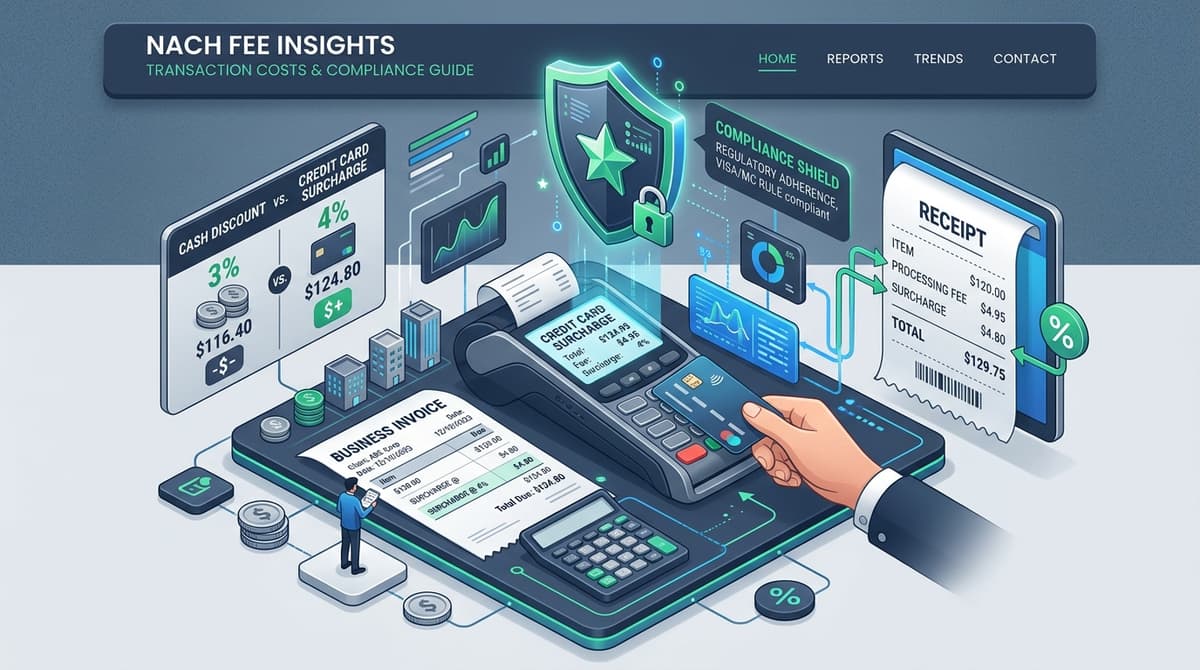
- Federal Surcharge Caps: Major card brand operating rules (Visa and Mastercard) cap credit card surcharges at 3.0% (or your actual cost of acceptance, whichever is lower).
- Debit Card Prohibition: It is a federal violation under the Durbin Amendment to assess a surcharge on debit card or prepaid card transactions, even if the debit card is run as "credit" without a PIN.
- State Laws: While most historic state-level total bans have been struck down on commercial speech grounds, states like Connecticut, Massachusetts, and Puerto Rico still enforce strict restrictions or disclosure standards.
- Checkout Disclosure: Merchants must display prominent signage at physical point-of-sale terminals or clear disclosures on digital checkouts before the customer enters payment details.
The Rules in the United Kingdom & European Union:#
- Under the EU Payment Services Directive 2 (PSD2) and UK Consumer Rights (Payment Surcharges) Regulations, consumer credit card surcharging is 100% illegal.
- UK merchants cannot charge any fee for debit or credit card acceptance on consumer sales. Surcharging is strictly limited to corporate B2B purchasing cards.
6. Four Concrete Strategies to Reduce Your Processing Fees Today#
- Implement Level 2 & Level 3 Processing for B2B Sales:
If you invoice corporate clients, passing additional line-item data (purchase order numbers, tax amounts, freight charges) automatically qualifies corporate cards for lower wholesale interchange rates, saving 0.50% to 1.10% per transaction. - Encourage ACH Direct Debit on Large Invoices:
On an invoice over $3,000, paying 2.9% credit card fees costs nearly $90. Stripe and modern invoicing engines charge 0.8% capped at $5.00 for ACH direct debits. Use our Free Invoice Generator to include bank wire and ACH coordinates directly on your PDF invoices. - Audit Your Merchant Statements for "Junk Fees":
Look out for PCI non-compliance fees ($20–$40/mo), monthly minimum discount fees, and batch settlement fees. A compliant provider will waive PCI fees once you complete the annual Self-Assessment Questionnaire (SAQ). - Negotiate with Stripe/PayPal When Crossing $100k/mo:
Stripe offers custom enterprise volume pricing once your annualized gross processing surpasses $1,000,000. Do not hesitate to request an interchange-plus rate schedule from your account representative.
Related Financial Precision Tools#
- Stripe Merchant Processing Calculator — Model exact domestic vs international transaction costs.
- Invoice Payment Terms & Late Fees Guide — How to structure Net 15/30 terms and protect working capital.
- Free PDF Invoice Generator — Create compliant B2B invoices with ACH and bank transfer instructions.
- PayPal Commercial Fee Calculator — Compare standard checkout fees against micropayments.
- Square POS & Register Calculator — Calculate in-person vs keyed-in card processing cuts.
- Ecommerce Net Margin Calculator — Model gross margins across multi-channel sales.
Common Inquiries & Regulations
What is Interchange-Plus pricing?
Interchange-Plus (IC+) is a transparent merchant pricing model where you pay the exact wholesale fee charged by the card networks (Visa, Mastercard, Discover) plus a fixed, disclosed markup to your payment processor (e.g., Interchange + 0.20% + $0.10). It is considered the fairest and most cost-effective pricing structure for growing businesses.
What is flat-rate processing?
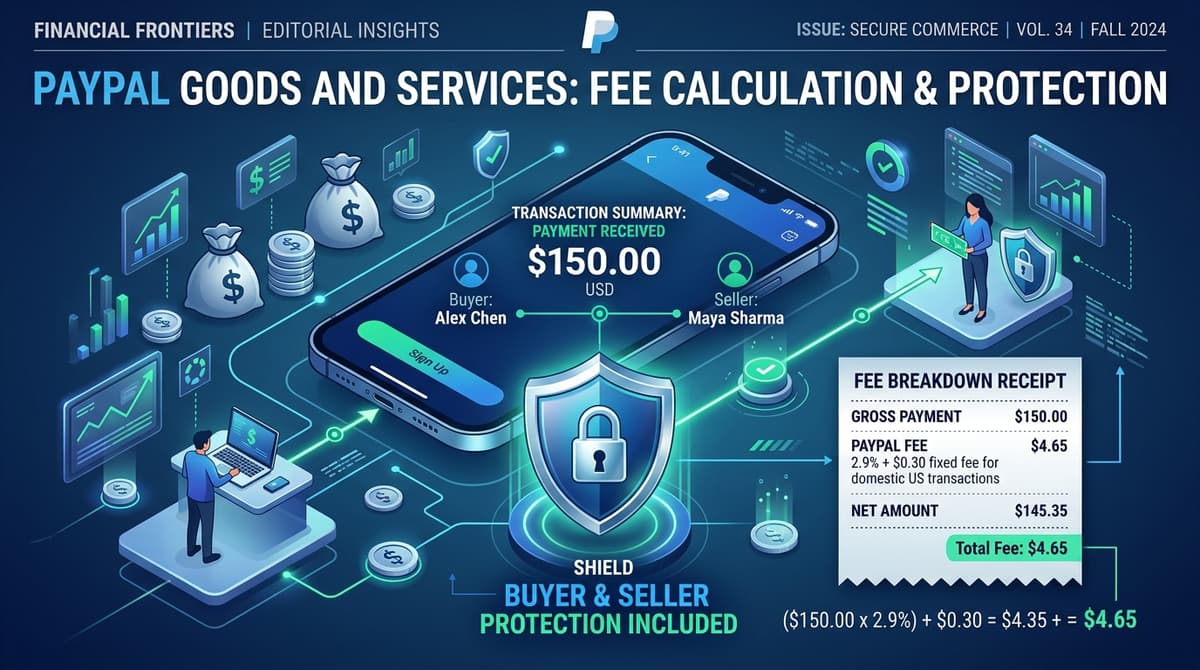
Flat-rate processing (used by providers like Stripe, Square, and PayPal) charges a single fixed percentage and transaction fee (e.g., 2.9% + $0.30) regardless of the card type. While simple and predictable, the provider pockets the margin on lower-cost debit cards and standard credit cards.
At what processing volume should a business switch to Interchange-Plus?
Most financial analysts recommend switching from a flat-rate aggregator (like Stripe or Square) to a dedicated Interchange-Plus merchant account when your monthly processing volume consistently exceeds $15,000 to $20,000. At this threshold, the lower per-transaction cost outweighs the modest monthly account fee.
Can businesses legally pass credit card fees onto customers via surcharges?
In the United States, credit card surcharging is legally permitted in most states, provided the surcharge does not exceed your actual cost of acceptance or the card brand cap (typically 3.0%), and is clearly disclosed before checkout. Surcharging debit cards is strictly illegal under the Durbin Amendment. In the UK and EU, all consumer card surcharges are completely prohibited under PSD2 regulations.
Test These Numbers With Your Exact Transaction Data
Don't guess your margins. Use FeeKit's free, client-side financial precision tools to model your exact gross revenue, deductions, and tax compliance: