
Small Business Bookkeeping Basics: A Practical Beginner's Guide
Master bookkeeping fundamentals for small businesses and freelancers. Learn single vs double-entry accounting, cash vs accrual, the chart of accounts, and month-end reconciliations.

Many entrepreneurs start businesses to pursue creative, technical, or trade crafts—not to manage general ledgers. Yet financial recordkeeping is the foundational operating system of every enduring enterprise.
Neglecting bookkeeping leads to blind cash flow decisions, uncollected client invoices, missed tax deductions, and stressful tax season scrambles.
In this guide from the FeeKit Editorial Desk, we break down the foundational concepts of small business bookkeeping, how to organize your accounts, and the monthly routine required to keep your business financially compliant and audit-ready.
1. Golden Rule Zero: Separate Personal and Business Finances#
Before touching a spreadsheet or bookkeeping app, you must establish an absolute boundary between your personal finances and your business entities:
- Open a Dedicated Business Checking Account: Even if you operate as an unregistered sole proprietor under your personal legal name, open a separate bank account used exclusively for business deposits and professional expenses.
- Never Commingle Funds: Commingling personal groceries or rent payments with business software subscriptions erodes your corporate liability veil (if operating as an LLC or corporation) and creates a nightmare for tax preparers.
- Pay Yourself via Formal Transfers: When taking money out of the business for personal living costs, execute a formal bank transfer labeled "Owner's Draw" or "Shareholder Distribution" (or process formal W-2 payroll if an S-Corporation).
2. Cash vs. Accrual Accounting: Which Should You Use?#
Small businesses must choose an accounting method to govern when income and expenses are recognized in financial records:
| Accounting Method | When Revenue Is Recorded | When Expenses Are Recorded | Best Used For |
|---|---|---|---|
| Cash Basis | When cash is received in bank | When cash is paid out of bank | Freelancers, consultants, service businesses, sole proprietors |
| Accrual Basis | When the invoice is issued | When the vendor bill is received | Businesses with physical inventory, retail shops, funded startups |
The Cash Accounting Advantage for Service Providers#
Under cash accounting, if you issue a $10,000 invoice in December 2026, but the client does not wire payment until January 2027, you do not owe income tax on that $10,000 for the 2026 tax year. For most service providers with minimal physical inventory, cash accounting is the simplest and most cash-efficient approach.
3. Single-Entry vs. Double-Entry Bookkeeping#
There are two primary systems for logging commercial transactions:
Single-Entry Bookkeeping#
Similar to a personal checkbook register. Every transaction is recorded as a single positive entry (income) or negative entry (expense).
- Pros: Simple to maintain in a basic spreadsheet.
- Cons: Prone to unspotted mathematical errors; cannot generate an accurate balance sheet or track assets and liabilities over time.
Double-Entry Bookkeeping#
The global standard of commercial accounting since the Renaissance. Every financial event affects at least two accounts via a Debit and a Credit, ensuring the fundamental accounting equation remains perfectly balanced:
Assets = Liabilities + Owner's Equity
Example: Purchasing a $1,200 work laptop with a business credit card
- Debit: Equipment Asset Account increases by $1,200
- Credit: Credit Card Liability Account increases by $1,200
Result: Both sides of the equation balance perfectly.
Modern accounting software automates double-entry logic behind simple user interfaces, but understanding the concept helps you interpret balance sheets.
4. The Five Core Categories of the Chart of Accounts (COA)#
Every financial transaction in your business fits into one of five standard ledger buckets:
- Assets (What the business owns): Checking accounts, accounts receivable, computers, office furniture.
- Liabilities (What the business owes): Credit card balances, vendor accounts payable, business loans, sales tax collected but not yet remitted.
- Equity (The owner's net worth in the business): Capital contributions made by the founder minus owner draws taken out, plus retained earnings.
- Revenue (Income earned): Consulting fees, digital product sales, design service retainers.
- Expenses (Operational costs): Software licenses, web hosting, payment gateway processing cuts, subcontractor fees, legal expenses.
5. The Monthly Bookkeeping Workflow (Checklist)#
Bookkeeping should never be postponed until year-end tax season. Performing this 4-step reconciliation routine at the end of each month takes less than an hour:
Step 1: Reconcile Bank and Credit Card Statements#
Bank reconciliation is the process of comparing your internal bookkeeping records against your official monthly bank statement:
- Match every deposit to an issued invoice or customer payment.
- Match every debit to an expense receipt or bill.
- Investigate any discrepancies (e.g., duplicate charges, unauthorized subscriptions).
Step 2: Audit Accounts Receivable Aging#
Review your outstanding unpaid client invoices:
- Identify invoices that are 15, 30, or 60 days overdue.
- Send polite payment reminders referencing the payment terms established on your invoice.
- If you need to generate professional, standardized invoices, use our Free Invoice Generator.
Step 3: Set Aside Tax Reserves#
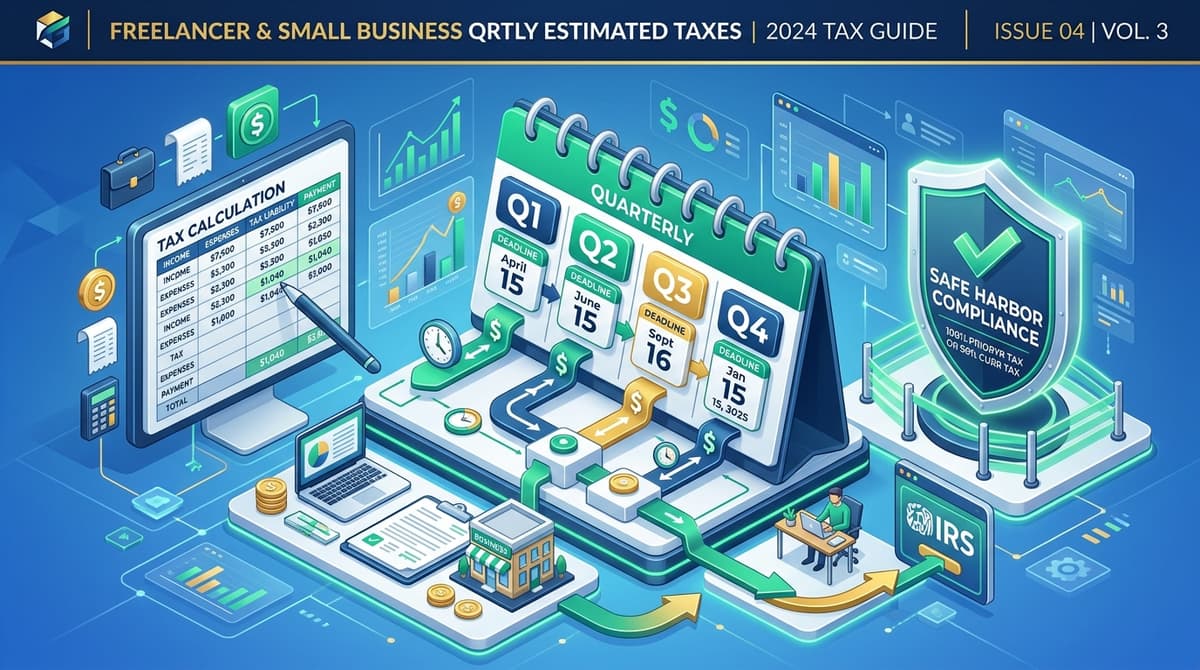
Every time client revenue clears your bank account, immediately transfer your estimated tax percentage (typically 25% to 30% of net profit for US sole proprietors) into a separate high-yield tax savings account. This ensures you have ready capital when IRS Form 1040-ES quarterly estimated tax payments are due. Model your liability with our IRS Quarterly Tax Calculator.
Step 4: Generate the Three Core Financial Statements#
At month-end, review three primary reports:
- Profit & Loss Statement (P&L): Total Revenue minus Cost of Goods Sold and Operating Expenses = Net Profit.
- Balance Sheet: Total Assets, Liabilities, and Equity as of the final day of the month.
- Cash Flow Statement: Actual cash inflows and outflows across operating, investing, and financing activities.
Common Bookkeeping Pitfalls to Avoid#
- Throwing Away Receipts: The IRS requires documentary proof for expenses exceeding $75. Use a smartphone scanner or cloud folder to preserve digital copies of all receipts.
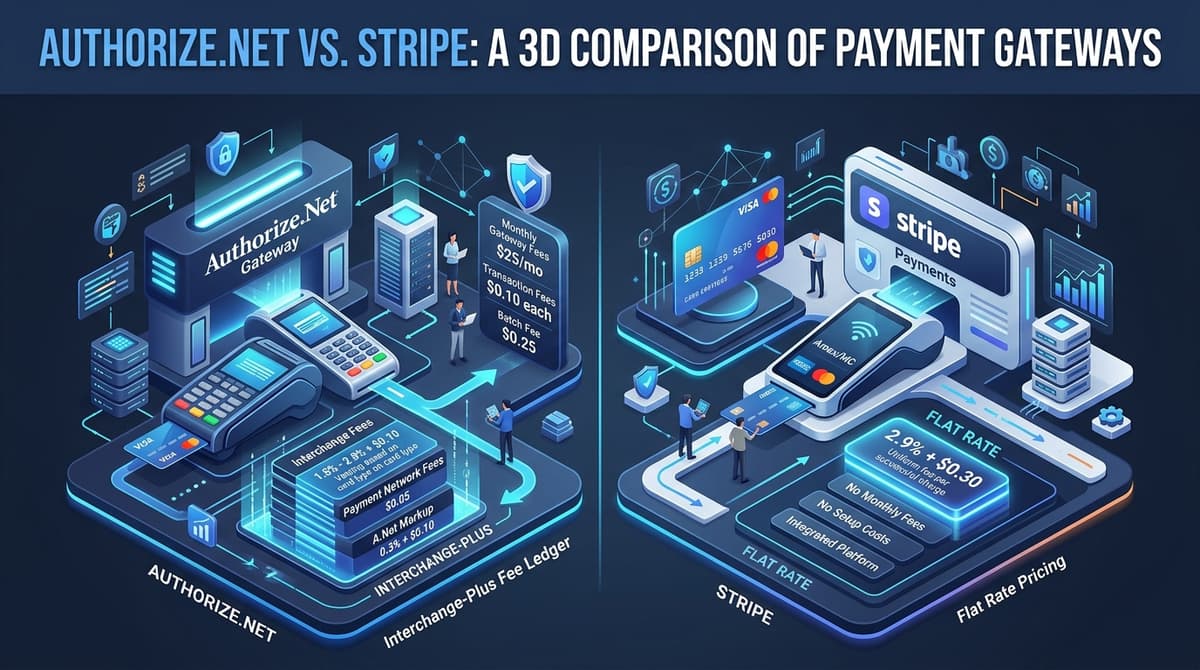
- Ignoring Merchant Processing Fees: When a client pays a $1,000 invoice via Stripe and Stripe deposits $970.70 into your bank, do not record gross income as $970.70. Record gross revenue as $1,000.00 and log the $29.30 difference as a deductible Payment Processing Merchant Expense. Check gateway cuts using our Stripe Fee Calculator.
- Misclassifying Contractors as Employees: Be aware of IRS independent contractor rules. Ensure all 1099 contractors provide a signed Form W-9 before you issue their first payment.
Explore our Small Business Content Hub for more business financial calculation suites and operational guides.
Common Inquiries & Regulations
What is the difference between bookkeeping and accounting?
Bookkeeping is the ongoing administrative recording of financial transactions (logging sales receipts, categorizing expense bills, reconciling bank accounts). Accounting is the higher-level analysis, interpretation, and statutory tax reporting of that data (preparing annual financial statements, tax strategy, and corporate filings).
Should a small business use cash or accrual accounting?
Most solo freelancers, consultants, and small service businesses with annual gross revenue under $25 million use cash-basis accounting because it is simple: income is recorded only when cash enters the bank account, and expenses are recorded only when paid. Accrual accounting records income when invoices are sent and expenses when bills are received, providing better insight for companies with substantial inventory or long billing lag.
What is a Chart of Accounts (COA)?
A Chart of Accounts is a categorized index of every financial account in your business ledger, organized into five standard categories: Assets, Liabilities, Equity, Revenue, and Expenses. It provides the architectural structure for your financial statements.
Test These Numbers With Your Exact Transaction Data
Don't guess your margins. Use FeeKit's free, client-side financial precision tools to model your exact gross revenue, deductions, and tax compliance: