
How to Track Business Expenses as a Freelancer: The Complete Tax Deduction Guide
Learn how to track and categorize business expenses as a freelancer. Maximize Schedule C tax write-offs, the home office deduction, mileage, and software expenses.

For salaried W-2 employees, tracking daily expenses offers minimal tax benefit because the Tax Cuts and Jobs Act (TCJA) eliminated miscellaneous itemized deductions for unreimbursed employee expenses.
For independent contractors, freelancers, and small business owners, however, expense tracking is the single most powerful legal mechanism for reducing your tax bill.
Because independent professionals pay taxes on net profit rather than gross receipts, every dollar of legitimate business spending directly shields income from both federal and state income taxes and the 15.3% Self-Employment (SECA) tax.
In this guide from the FeeKit Editorial Desk, we explain the IRS legal standards for deductible expenses, break down the most valuable freelancer write-offs, and share an actionable system for maintaining audit-proof digital records.
The Legal Standard: "Ordinary and Necessary"#
Under Internal Revenue Code § 162, a business expense is legally deductible if it satisfies two criteria:
- Ordinary: An expense that is common and accepted in your trade or industry. (For a software engineer, code repositories, cloud hosting, and multiple monitors are ordinary).
- Necessary: An expense that is helpful and appropriate for your business operations. (It does not have to be indispensable, but it must have a clear commercial purpose).
Expenses incurred purely for personal, living, or family purposes are strictly non-deductible under IRC § 262. When an expense serves both personal and business functions (such as a cell phone or home internet), you may deduct only the business-use percentage.
Top 8 Deductible Expense Categories for Freelancers#
| Expense Category | IRS Schedule C Line | Deductibility Rules & Limits |
|---|---|---|
| 1. Software & Digital Subscriptions | Line 27a (Other Expenses) | 100% deductible (Adobe, Figma, GitHub, FreshBooks, Google Workspace) |
| 2. Home Office | Line 30 (Form 8829 or Simplified) | $5/sq ft up to $1,500 OR percentage of rent/utilities |
| 3. Hardware & Equipment | Line 13 (Depreciation / Sec 179) | 100% first-year write-off under Section 179 or de minimis safe harbor |
| 4. Professional Services | Line 17 (Legal and professional) | 100% deductible (CPA tax prep, attorney contract reviews, bookkeeping) |
| 5. Payment Processing Fees | Line 10 (Commissions and fees) | 100% deductible (Stripe 2.9% cuts, PayPal fees, wire charges) |
| 6. Business Vehicle Mileage | Line 9 (Car and truck expenses) | Standard IRS mileage rate (cents per mile) or actual fuel/maintenance |
| 7. Business Meals | Line 24b (Deductible meals) | 50% deductible; must have clear business agenda with client/partner |
| 8. Self-Employed Health Insurance | Form 1040 Schedule 1 (Line 17) | 100% deduction above-the-line against personal adjusted gross income |
1. The Home Office Deduction: Simplified vs Actual#
If you use part of your home exclusively and regularly for freelance work, you have two options:
- The Simplified Method: Multiply the square footage of your dedicated workspace by the IRS statutory rate of $5.00 per square foot (up to 300 square feet, for a flat $1,500 annual deduction). No utility bills or lease documents required.
- The Actual Expense Method (Form 8829): Calculate the exact percentage of your home occupied by your office (e.g., 200 sq ft office in a 1,000 sq ft apartment = 20%). You deduct 20% of your annual rent, electricity, heating, water, and renters insurance.
Audit Warning: The space must satisfy the exclusive use test. A desk in a spare bedroom used only for client work qualifies. A laptop on the kitchen dining table where family dinners occur does not qualify.
2. Hardware and Computer Equipment (Section 179)#
When purchasing a $2,500 workstation or $1,200 smartphone, traditional accounting rules historically required depreciating the asset over a 5-year MACRS schedule. Under the IRS De Minimis Safe Harbor Election (tangible property under $2,500 per invoice) and Section 179 expensing, small businesses can deduct 100% of the equipment cost in the year of purchase.
3. Payment Processing & Merchant Fees#
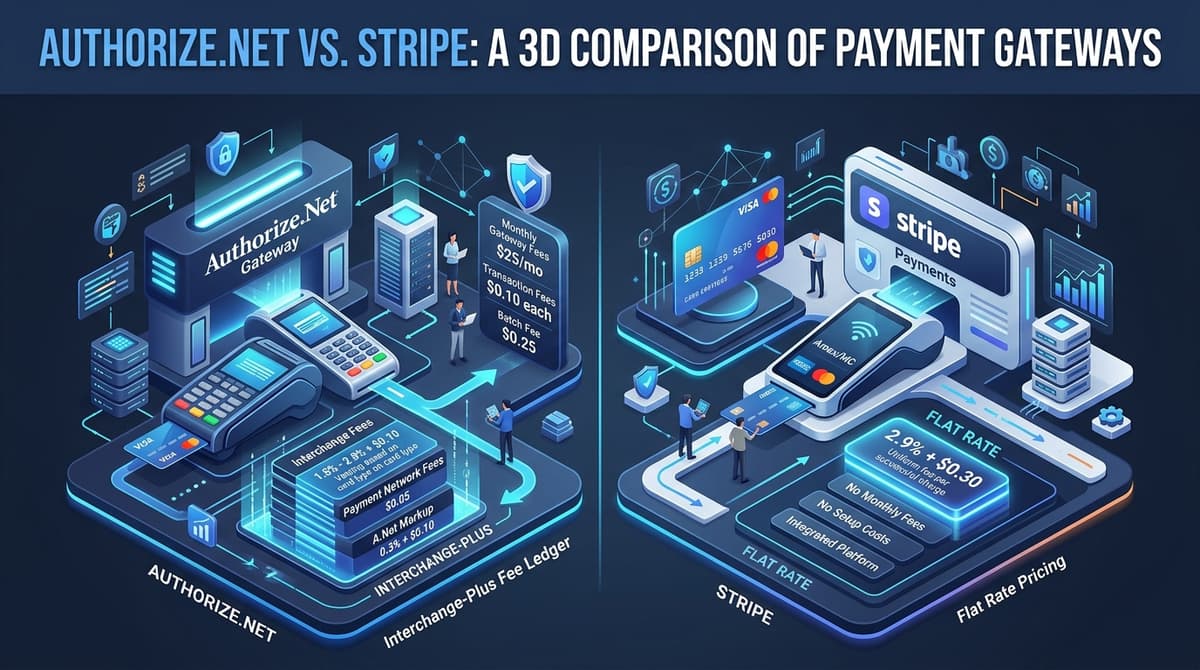
When a client pays an invoice via Stripe, PayPal, or credit card, the processing network deducts their transaction cut before transferring funds. Many freelancers erroneously record only the net amount deposited in their bank.
- Correct Method: Record the full invoice amount as Gross Revenue on Schedule C line 1.
- Log all processing cuts as deductible business expenses on Line 10. Check exact deductions using our Stripe Fee Calculator.
4. Vehicle Mileage vs Actual Expenses#
If you drive your personal vehicle to meet clients, conduct on-site project visits, or purchase supplies:
- Standard Mileage Rate: Log business miles driven using a mileage tracking app or written log. Multiply total annual business miles by the published IRS statutory rate.
- Actual Expense Method: Track all gas, oil changes, insurance, and repairs, and multiply by your annual business mileage percentage. Crucial Rule: Commuting from home to a regular shared co-working desk is generally non-deductible commuting. Driving between client locations is deductible.
The Step-by-Step Expense Tracking System#
To ensure no deductions are missed and avoid tax season distress, implement this 3-step tracking routine:
Step 1: Dedicate One Card to Business Spending#
Route 100% of your professional expenses through a single dedicated business credit card or business checking account debit card. If an expense is not on that statement, it should not exist.
Step 2: Digitize Receipts Immediately#
Under IRS rules, credit card statements verify that money left your account, but they do not prove what was purchased. For purchases over $75 (and all travel/meal expenses):
- Photograph the receipt immediately with your smartphone.
- Save images into a cloud storage folder organized by year (e.g.,
Taxes/2026/Receipts/). - Annotate meal receipts with the client's name and the business topic discussed.
Step 3: Categorize Transactions Monthly#
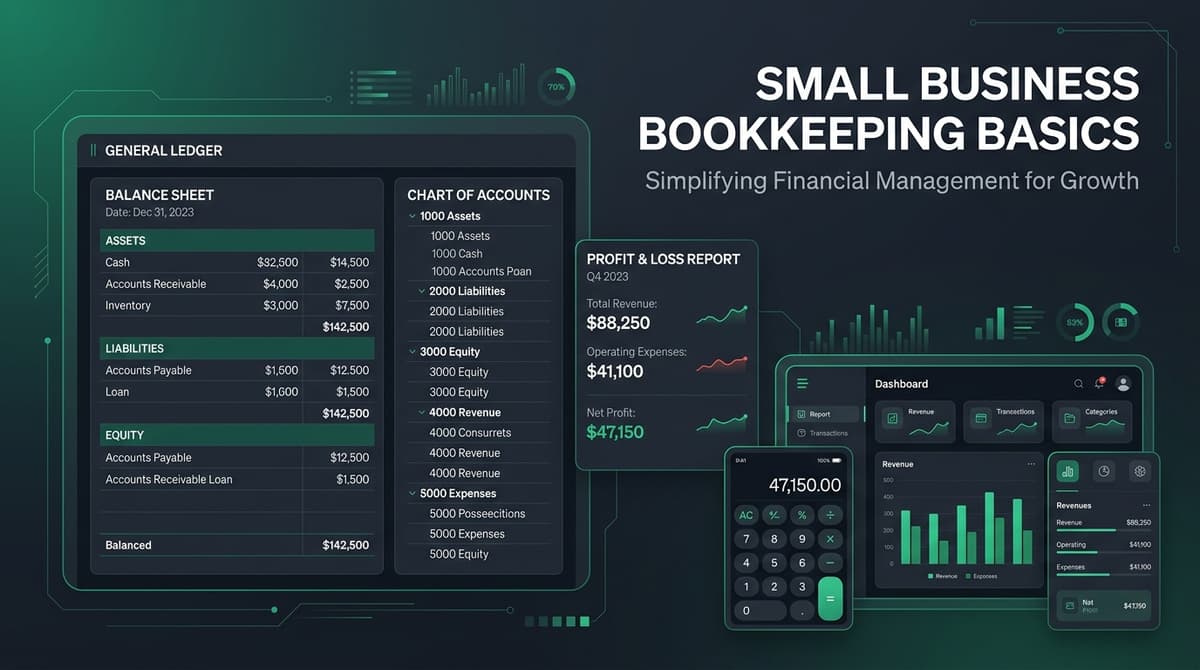
Set aside 30 minutes at the end of each month to review your business bank statements, verify categorized totals against your Chart of Accounts, and verify your estimated quarterly tax liabilities using our Quarterly Tax Calculator.
To structure your billable rates and account for these annual expenses, use our Freelance Rate & Tax Calculator.
Common Inquiries & Regulations
How does deducting expenses reduce my taxes as a freelancer?
As an independent 1099 contractor or sole proprietor, your income tax and 15.3% Self-Employment (SECA) tax are calculated on your net profit (Gross Revenue minus Deductible Business Expenses), not on your gross revenue. Every $1,000 in legitimate business deductions saves between $250 and $380 in combined federal, state, and self-employment taxes depending on your tax bracket.
Can I deduct my home office as a freelancer?
Yes, provided the space is used exclusively and regularly as your principal place of business under Internal Revenue Code § 280A. You can use the Simplified Method ($5 per square foot up to 300 sq ft, for a maximum $1,500 deduction) or the Actual Expense Method (deducting the percentage of rent, utilities, and internet matching your office's square footage).
Are payment gateway processing fees tax deductible?
Yes. Payment processing cuts deducted by Stripe, PayPal, Square, or merchant banks are 100% tax deductible as ordinary and necessary business expenses. You report gross revenue on Schedule C line 1 and deduct merchant processing fees on line 10 (Commissions and fees) or line 27a (Other expenses).
Test These Numbers With Your Exact Transaction Data
Don't guess your margins. Use FeeKit's free, client-side financial precision tools to model your exact gross revenue, deductions, and tax compliance: