
How to Calculate Your Freelance Hourly Rate: The Complete Mathematical Formula
Step-by-step formula to calculate your freelance hourly rate. Account for the 15.3% SECA self-employment tax, realistic billable hours, business overhead, and healthcare reserves.

One of the most dangerous traps for professionals transitioning into freelancing, consulting, or independent agency work is underpricing their billable hourly rate.
Most newly independent professionals make a fundamental mathematical error: they take their previous salaried corporate income (e.g., $90,000/year), divide it by 2,080 working hours (40 hours × 52 weeks), and arrive at an hourly rate of $43.27/hour.
When tax season arrives and health insurance premiums, software subscriptions, and unpaid client acquisition hours take their toll, these freelancers discover they are making 30% to 50% less in net take-home pay than they did as corporate employees.
In this guide from the FeeKit Editorial Desk, we unpack the complete mathematical formula for calculating a profitable freelance hourly rate that covers taxes, overhead, and downtime. You can also calculate your personalized rate across 37 creative and engineering roles using our Freelance Rate & Tax Calculator.
The Four Invisible Costs of Independent Work#
When an employer pays a salaried W-2 employee, the worker only sees their gross pay and standard paycheck withholdings. In reality, the employer pays an additional 25% to 40% in non-wage overhead:
- The 7.65% Employer FICA Tax Match: Employers legally must pay 6.2% for Social Security and 1.45% for Medicare on top of employee wages. Independent 1099 contractors must pay the entire 15.3% Self-Employment (SECA) tax themselves.
- Healthcare & Retirement Benefits: Independent contractors must pay 100% of their health, dental, and vision insurance premiums, plus self-fund SEP-IRA or Solo 401(k) retirement contributions without employer matching.
- Business Overhead: Hardware (laptops, monitors), software licenses (design suites, accounting platforms, code repositories), legal contracts, and business banking fees.
- The Billable Hours Reality Gap: You cannot bill 40 hours per week every week. Marketing, client proposals, invoicing, and invoicing administration represent non-billable time.
Step 1: Calculate Your Realistic Annual Billable Hours#
Full-time salaried employment assumes 2,080 annual hours:
40 Hours/Week × 52 Weeks = 2,080 Total Working Hours
However, a realistic freelance year requires subtracting unbillable time:
- Paid Time Off / Vacations: 3 weeks (120 hours)
- Holidays & Sick Leave: 2 weeks (80 hours)
- Available Working Hours: 52 - 5 = 47 Weeks × 40 Hours = 1,880 Hours
Applying the Billable Utilization Rate#
Out of those 1,880 working hours, independent consultants spend 30% to 45% of their working week on administrative tasks:
- Sending proposals and cold pitching
- Client phone calls that don't convert
- Bookkeeping, invoicing, and contract management
- Professional development and skill upgrading
This leaves a realistic Billable Utilization Rate of 60%:
Realistic Billable Hours = 1,880 Hours × 0.60 = 1,128 Billable Hours per Year
(In practice, most full-time freelancers bill between 1,000 and 1,200 hours annually).
Step 2: Sum Your Total Gross Financial Need#
To calculate your target gross business revenue, you must sum four components:
Gross Revenue Target = Target Net Take-Home + Taxes (Income + SECA) + Business Expenses + Benefits Reserve
1. Target Net Take-Home Pay#
What you actually want deposited in your personal bank account for living expenses (e.g., $100,000).
2. Taxes (Income Tax + 15.3% SECA)#
- Federal & State Income Tax: Typically 15% to 22% effective rate depending on your tax bracket.
- Self-Employment Tax (SECA): 15.3% on 92.35% of net business profit:
SECA Tax = Net Profit × 0.9235 × 0.153
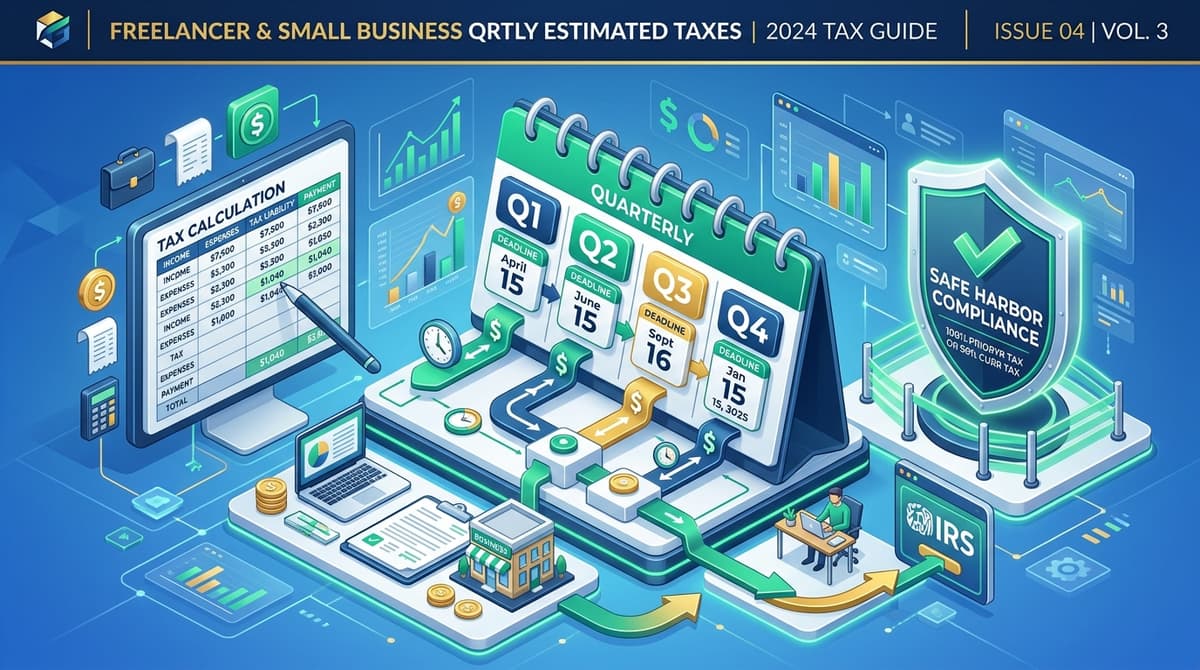
- As a general rule of thumb, conservative financial planning requires reserving 28% to 35% of your net profit for total income and self-employment taxes.
3. Annual Business Expenses (Overhead)#
Typical baseline overhead for an independent consultant:
- Software & SaaS (Accounting, Adobe, GitHub, Figma): $2,400/yr
- Hardware depreciation (laptop, phone): $1,500/yr
- CPA / Legal / Tax prep: $1,200/yr
- Web hosting & marketing: $800/yr
- Total Overhead: ~$5,900/yr
4. Healthcare & Benefits Reserve#
- Individual health and dental insurance premiums: ~$6,000 to $8,400/yr
- Solo 401(k) retirement savings: ~$6,000/yr
- Total Benefits: ~$12,000/yr
Step 3: The Complete Hourly Rate Calculation#
Let's work through a concrete example for a consultant seeking a $100,000 net personal income:
| Expense Category | Annual Amount |
|---|---|
| Desired Personal Take-Home Pay | $100,000 |
| Business Overhead (Software, Hardware, Legal) | $6,000 |
| Health Insurance & Retirement Self-Funding | $12,000 |
| Subtotal (Net Business Profit Target) | $118,000 |
| Income Tax & 15.3% SECA Tax Reserve (~30%) | $35,400 |
| Total Gross Revenue Target | $153,400 |
Now divide the Total Gross Revenue Target by your Realistic Billable Hours (1,128 hours):
Minimum Hourly Rate = $153,400 / 1,128 Hours = $135.99/hour
Comparison: Dividing $100,000 by 2,080 hours yielded $48.08/hour. If this consultant charged $48/hour, their actual net take-home pay would be less than $35,000 after taxes, health insurance, and administrative hours! To earn a true $100,000 take-home, they must charge $135 to $140 per hour.
Converting Hourly Rates to Day Rates and Fixed Milestones#
Billing strictly by the hour often creates friction with clients because clients cannot predict their final project cost. Once you establish your hourly baseline, consider these two commercial packaging strategies:
1. The 8-Hour Day Rate#
Day Rate = Hourly Rate × 8 Hours
For a $135/hour consultant:
Standard Day Rate = $135 × 8 = $1,080/day
Offering day rates encourages clients to book you for full, uninterrupted days of work rather than fragmented one-hour tasks.
2. Value-Based / Milestone Pricing#
Estimate the total hours required to deliver a project, multiply by your hourly rate, and add a 20% scope-creep contingency buffer. Present the quote as a single fixed investment:
Fixed Project Fee = (Estimated Hours × Hourly Rate) × 1.20
When you invoice clients for milestone or hourly work, generate clean, professional PDF invoices with custom payment terms using our Free Invoice Generator.
Summary: Quick Freelance Pricing Rules#
- The 1.3x Rule: Never accept a 1099 hourly rate that is not at least 30% to 50% higher than your previous W-2 hourly wage.
- The 1,000-Hour Rule: When testing rate scenarios, divide your gross revenue goal by 1,000 to 1,100 hours, never 2,080.
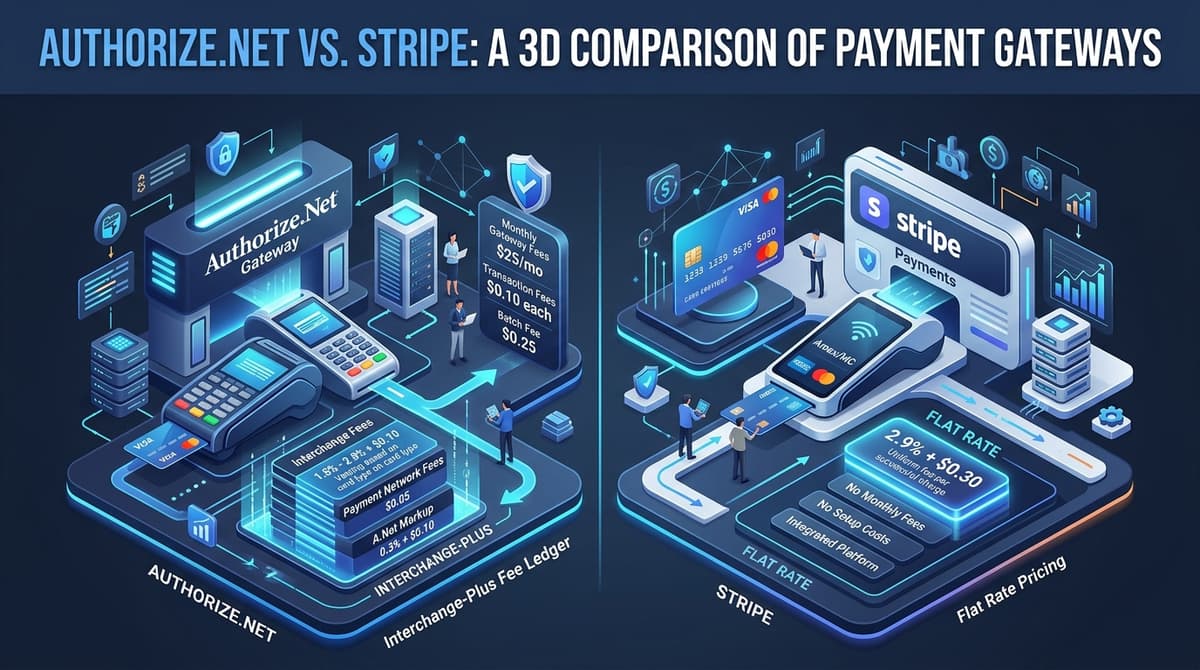
- Pass Through Processing Fees: When clients pay via credit card, the processor deducts 2.9% + $0.30. Ensure your contract terms account for gateway cuts using our Stripe Fee Calculator.
Common Inquiries & Regulations
Why can't I just divide my target salary by 2,080 hours?
A standard 40-hour workweek yields 2,080 annual hours, but independent freelancers cannot bill 2,080 hours. Between client prospecting, administrative bookkeeping, contract negotiations, unpaid holidays, and sick days, typical independent professionals achieve only 1,000 to 1,200 billable hours per year (50% to 60% billable utilization). Dividing by 2,080 will underprice your services by nearly half.
What is the 1.3x to 1.5x freelance multiplier rule?
To match the net economic compensation of a salaried W-2 job, a freelance 1099 contractor must charge at least 1.3 to 1.5 times the equivalent hourly W-2 wage. This buffer covers the employer portion of FICA payroll taxes (7.65%), self-funded medical/dental insurance, equipment depreciation, software subscriptions, and non-billable overhead.
How do I calculate my 8-hour day rate from an hourly rate?
A standard day rate is calculated as: Hourly Rate × 8 Hours. Many consultants apply a slight 5% to 10% daily discount for full-day bookings to incentivize clients to purchase structured full-day blocks rather than sporadic individual hours.
Test These Numbers With Your Exact Transaction Data
Don't guess your margins. Use FeeKit's free, client-side financial precision tools to model your exact gross revenue, deductions, and tax compliance: